Building rural research capacity: Reflections on our training partnership with the National Centre for Remote and Rural Health and Care
Written by Alexia Karageorgis
November 2026
Between 2025 and 2026, Community Knowledge Matters had the privilege of partnering with the National Centre for Remote and Rural Health and Care (NES), hosted by NHS Education for Scotland, to develop and deliver a training programme for health and care practitioners working in remote, rural, and/or island areas of Scotland interested in carrying out research of their own.
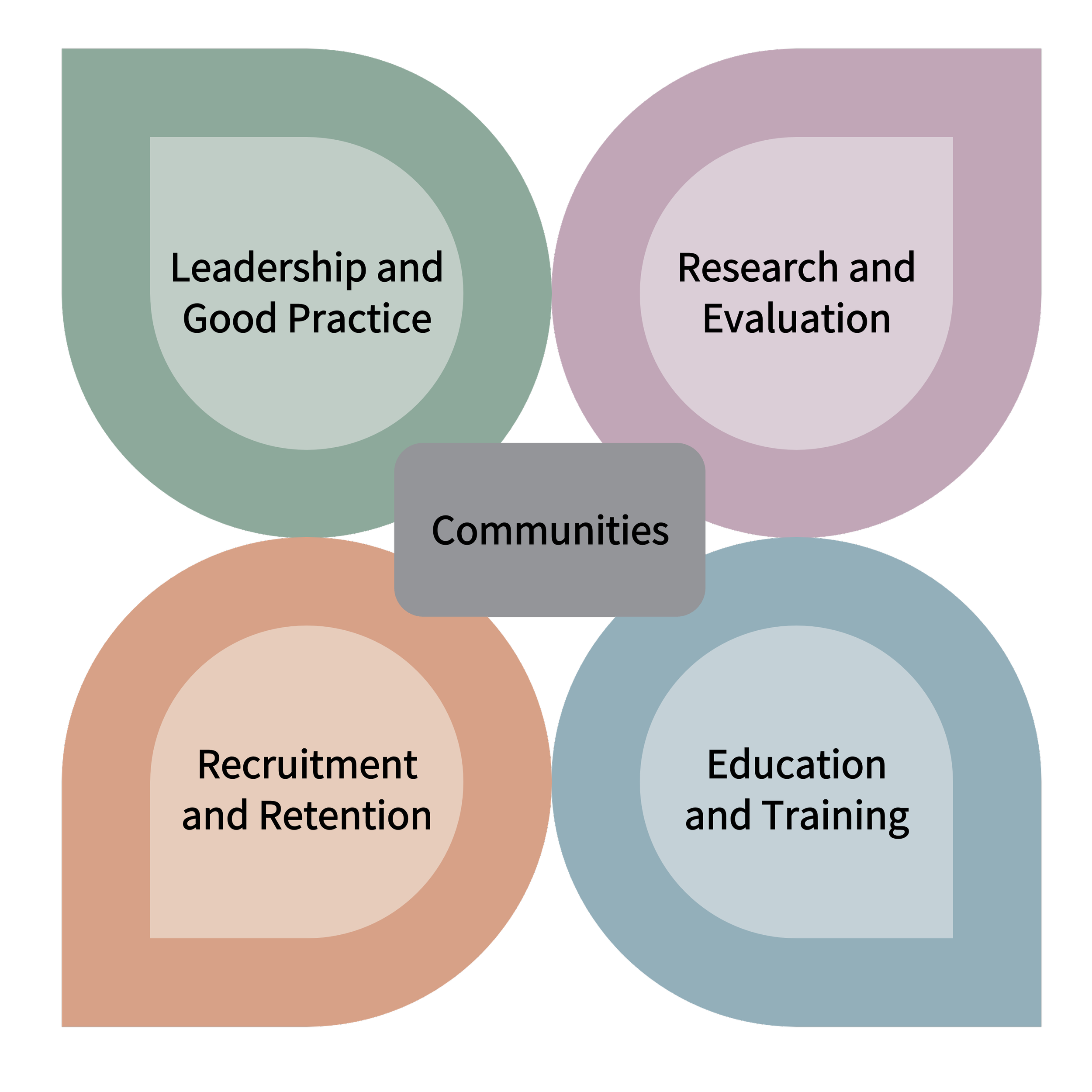
Overview of the National Centre for Remote and Rural Health and Care.
Commissioned by the Scottish Government in 2022 and launched in October 2023, the centre was established with the aim of "Supporting the delivery of improved care for remote, rural and island communities across Scotland; to reduce remote, rural and island health and wellbeing inequalities; and to achieve this through focused work on improving the sustainability, capacity, and capability of remote, rural and island Primary care and community-based workforce and service delivery." The understanding that rural health has its own unique set of challenges and strengths and that, very often, extrapolating data from findings in urban contexts is not effective, allowed the work of NES to specifically centre rural experiences and needs.
At the end of 2024, the Centre carried out a Training Needs Assessment to gather data from primary care practitioners around the barriers they face —most notably time and capacity constraints— and support they would require to carry out research of their own, taking into account both those with and without previous experience in research.
Following this, the centre partnered with Community Knowledge Matters to create a tailored research training programme for rural health practitioners: Remote, Rural & Island Health & Care Research: Foundations to Collaboration. Between October 2025 and March 2026, this fully funded online training course was delivered over 6 months to a group of 20 health and care practitioners working all over remote, rural and/or island regions of Scotland. The course stressed the importance of research being collaborative and co-produced with communities themselves, acknowledging power dynamics and exploring case-studies on navigating ethics and designing creative research methods suitable for rural and island contexts.
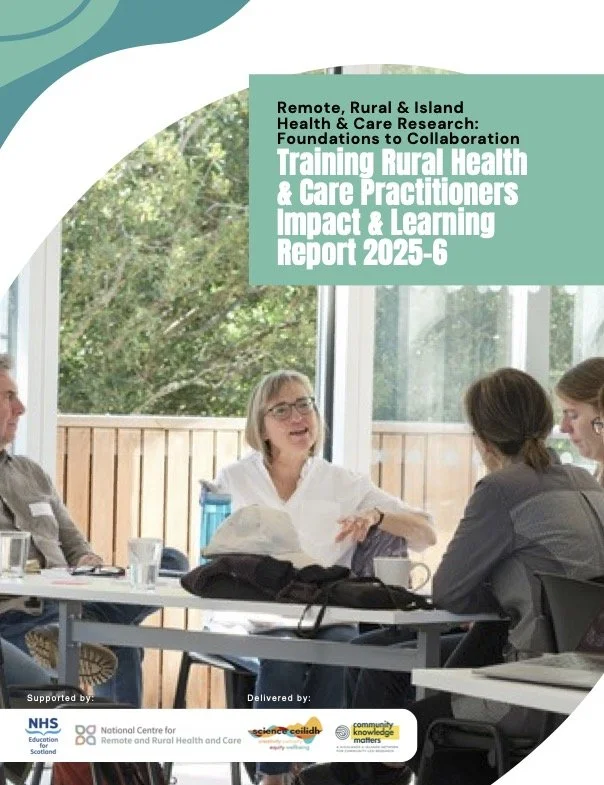
Training Rural Health & Care Practitioners: Impact & Learning Report 2025-6.
The participating practitioners overwhelmingly praised and appreciated the acknowledgement of their particular contexts and shared that this programme helped build their confidence, directed them to practical resources, introduced them to research approaches and helped them create connections in ways they would definitely be making use of moving forward.
“This has been the most helpful leadership/ personal development training for me ever in my present journey wishing to embark on a research pathway which I had felt very alone in and a bit lost. I feel so much more confident and have so many contacts and avenues for support which I will be using in due course.”
“The course has given me a better understanding not just of RRI contexts, but also of the enormous range of really important research that is being done, collaboratively, with people who should benefit from it.”
“I found the training very helpful in giving me a better understanding of remote, rural and island contexts, understanding the ethics involved, unique challenges and opportunities and different ways [to] conduct the research.”
"It was great to hear about different RRI contexts and I felt these were brought to life by the presentations and case studies and also discussions with other participants on the course. This really helped support my understanding."
High interest from practitioners unable to take part in the first iteration due to conflicting schedules highlights the great demand for dedicated support for practitioners in rural and island contexts.
A transitional period
Unfortunately, from April 2026, NHS Education for Scotland and NHS National Services Scotland came together as Public Services Delivery Scotland, and the Centre entered a transition into Phase Two. This means that our active partnership has concluded, and at the moment there is no plan for delivery of the programme with new cohorts. Find more information about this transitional period here.
We would like to recognise the significant impact the National Centre for Remote and Rural Health and Care had in its brief lifetime. The Centre shone a much-needed spotlight on the realities of working in rural Scotland, creating dedicated opportunities, funding, and tailored support specifically for these contexts where few existed before.