New Free-to Access Online Training Course: Meaningful Evaluation in Arts, Culture and Health
Written by Lewis Hou
October 2026
How can we capture and evaluate complex experiences in an arts, culture and broader contexts? And how can lived experience be embedded throughout?
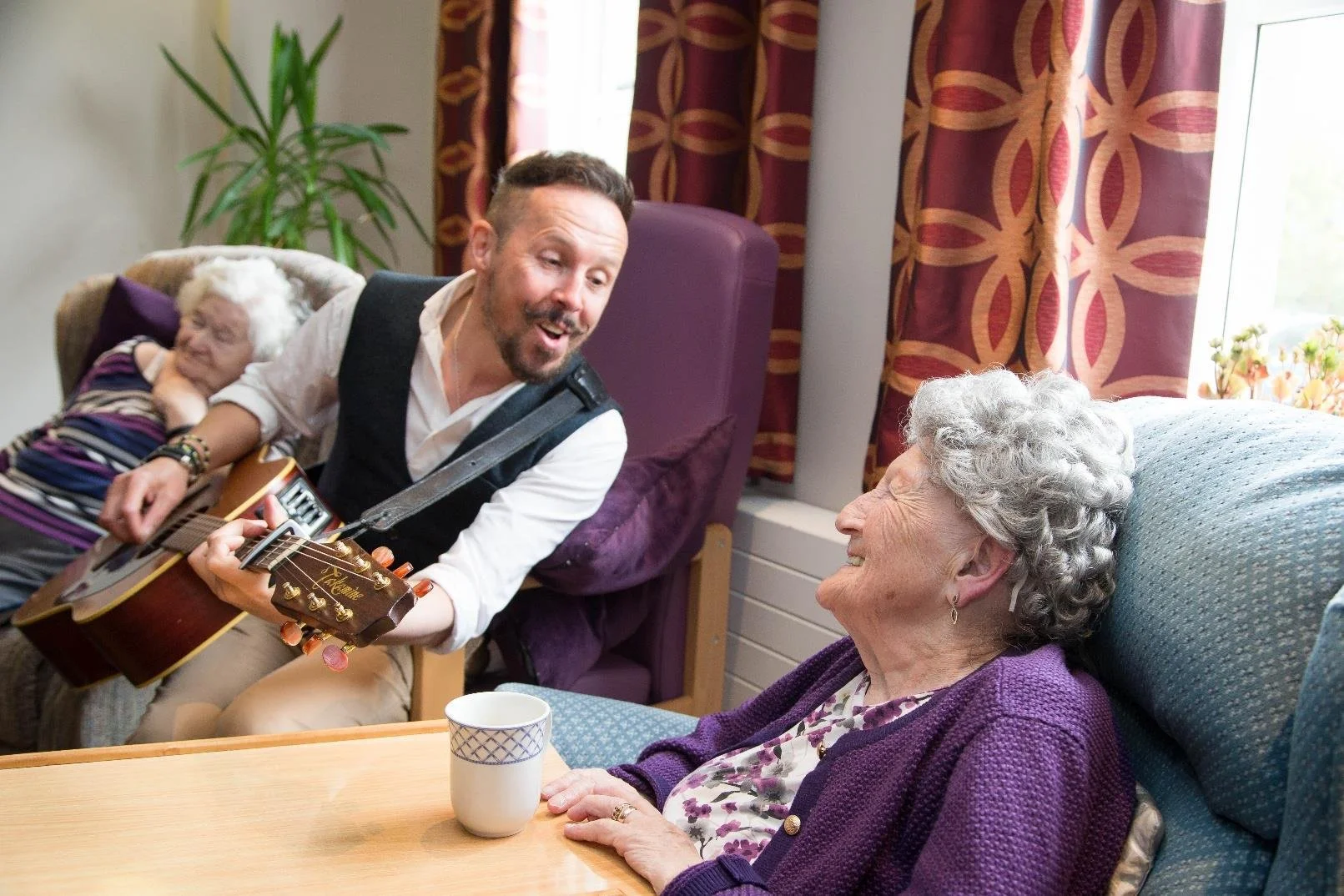
Evaluating impact in arts, culture and health settings can be challenging. How do you capture relationships, creativity, emotion and lived experience in ways that feel ethical, useful and authentic? Traditional approaches often focus on measurable outcomes, overlooking the complexity of human experience and leaving many practitioners searching for approaches that better reflect the realities of their work. The new two-week online course “Meaningful evaluation in arts, culture and health” introduces practical and creative approaches to evaluation that go beyond traditional data analysis.
We’re excited to be part of this new FutureLearn short course, which is free to access.
It is designed for researchers, practitioners, students and professionals who want to rethink how impact is understood and communicated. Through practical activities, reflection and real-world case studies, participants will explore creative and people-focused ways of gathering, interpreting and sharing evidence.
This was led by partners at the University of Edinburgh and has brilliant tools around creative ethnography, meaning-making, and ethical practice. It includes a conversation with Lewis Hou on co-producing in evaluation, featuring Agnes Houston MBE (Dementia Activist and collaborator on our “Dementia Through Our Eyes” school resource) and Kirstyn Knowles (Music in Hospitals & Care), using one of our favourite creative research techniques—the board game “Dixit”—with creative cards to stimulate ideas for discussion.
In Week 2 of the Course, we also share perspectives on how to mobilise the evidence and stories from evaluation to make a difference in practice and policy, through a conversation with Kathryn Welch (Culture Counts) and Dr Olivia Turner (University of Edinburgh). This draws our own experiences, particularly with Community Knowledge Matters supporting community-led research on a more structural level, as well as the wider equity questions around whose expertise and stories gets valued.
By the end of the course, participants will be better equipped to articulate the value of the work, collaborate across disciplines, and develop evaluation approaches that are thoughtful, inclusive and grounded in lived experience – and that contribute to real change.
Thanks to everyone involved including the Edinburgh Centre for Research on the Experience of Dementia, the Public Health, Arts, Theory, Social Science (PATHS) Research Group and the other collaborators Royal Conservatoire of Scotland, University of Florida, Queen Margaret University, Scottish Ballet, St Columba’s Hospice Care, Prescribe Culture and The Binks Hub.